ClearMed
All Immunology BriefingsNature Immunology
ImmunologyPreclinical3 min read

Autophagy in macrophages curtails IL-1α-mediated immune priming against lung infections

Here we found that basal autophagy suppressed the expression of Il1a in alveolar macrophages (AMs) and an otherwise protective innate immune priming against Staphylococcus aureus and influenza A virus (IAV), independently of the microbiome and adaptive immunity.

Published in Nature ImmunologyAnimal models
2/5 Preclinical
Evidence Meter · 2/5

Animal & Preclinical Data

Demonstrated in living animal models before large-scale human safety and dosing trials begin.

Source

Animal & Preclinical Data

2/5

Similar to genetic inactivation of autophagy, overexpression of IL-1α in AMs conferred broad spectrum protection against S. aureus and IAV, suggesting a possible strategy to fine-tune immune responses to combat important respiratory infections.

What Changes?

Immunology · Preclinical

Current Standard

Existing immunology care has lacked direct translational evidence targeting gut bacteria · inflammation · immune response.

New Finding

As a result, autophagy-deficient mice showed more efficient clearance of S. aureus along with reduced lung damage and inflammation.

3 Key Takeaways

Plain English Summary
  1. 01Core Finding

    Inactivating autophagy genes in AMs led to elevated expression of IL-1α in AMs, which subsequently enhanced IL-1R-MyD88 signaling in neutrophils and increased the recruitment of myeloid cells to the lung.

  2. 02Study Evidence

    Tested in a in vivo animal model (preclinical discovery) at the preclinical stage.

  3. 03Practical Meaning

    Early laboratory or animal model findings — human trials are still needed to confirm safety and benefit.

What This Means for You

As a result, autophagy-deficient mice showed more efficient clearance of S. aureus along with reduced lung damage and inflammation. Similar to genetic inactivation of autophagy, overexpression of IL-1α in AMs conferred broad spectrum protection against S. aureus and IAV, suggesting a possible strategy to fine-tune immune responses to combat important respiratory infections.

The Discovery

Host resistance to infection is initially determined by how well primed the innate immune system is to respond on first exposure to an invader, yet the mechanisms underlying this priming remain incompletely understood. Here we found that basal autophagy suppressed the expression of Il1a in alveolar macrophages (AMs) and an otherwise protective innate immune priming against Staphylococcus aureus and influenza A virus (IAV), independently of the and adaptive immunity. Inactivating autophagy genes in AMs led to elevated expression of IL-1α in AMs, which subsequently enhanced IL-1R-MyD88 signaling in neutrophils and increased the recruitment of myeloid cells to the lung.

How It Works, Simply

This immunology research focuses on gut bacteria · Inflammation · Immune response. Researchers evaluated it using an in vivo animal model (Preclinical discovery) at the preclinical stage of medical research.

3 Key Takeaways

Clinical Takeaways
  1. 01Core Finding

    Inactivating autophagy genes in AMs led to elevated expression of IL-1α in AMs, which subsequently enhanced IL-1R-MyD88 signaling in neutrophils and increased the recruitment of myeloid cells to the lung.

  2. 02Study Evidence

    Tested in a in vivo animal model (preclinical discovery) at the preclinical stage.

  3. 03Practical Meaning

    Early laboratory or animal model findings — human trials are still needed to confirm safety and benefit.

01

Biological Mechanism & Study Design

Study Design & Cohort

Animal models

In vivo animal model (Preclinical discovery) · Preclinical

Biological Pathway & Modality

Gut bacteria · Inflammation · Immune response

Intervention: Autophagy in macrophages curtails IL-1α-mediated immune priming against lung

02

Experimental Findings & Endpoints

Host resistance to infection is initially determined by how well primed the innate immune system is to respond on first exposure to an invader, yet the mechanisms underlying this priming remain incompletely understood.

Here we found that basal autophagy suppressed the expression of Il1a in alveolar macrophages (AMs) and an otherwise protective innate immune priming against Staphylococcus aureus and influenza A virus (IAV), independently of the and adaptive immunity. Inactivating autophagy genes in AMs led to elevated expression of IL-1α in AMs, which subsequently enhanced IL-1R-MyD88 signaling in neutrophils and increased the recruitment of myeloid cells to the lung.

03

Clinical Translation & Practice Context

As a result, autophagy-deficient mice showed more efficient clearance of S. aureus along with reduced lung damage and inflammation.

Similar to genetic inactivation of autophagy, overexpression of IL-1α in AMs conferred broad spectrum protection against S. aureus and IAV, suggesting a possible strategy to fine-tune immune responses to combat important respiratory infections.

03

The Bottom Line · Clinical Pearl

“Similar to genetic inactivation of autophagy, overexpression of IL-1α in AMs conferred broad spectrum protection against S. aureus and IAV, suggesting a possible strategy to fine-tune immune responses to combat important respiratory infections.”

Published in Nature Immunology · Current Stage: Preclinical
Immunology · Preclinical
Study Type
Animal models

In vivo animal model (Preclinical discovery)

Evidence Score
2/5 · Animal & Preclinical Data
Evidence Meter · 2/5

Animal & Preclinical Data

Demonstrated in living animal models before large-scale human safety and dosing trials begin.

Demonstrated in living animal models before large-scale human safety and dosing trials begin.

Who It Applies To
Preclinical research (In vivo animal model (Preclinical discovery)) — not yet tested in human patients
Intervention & Mechanism
Autophagy in macrophages curtails IL-1α-mediated immune priming against lung

Gut bacteria · Inflammation · Immune response

Key Limitation
Early laboratory or animal model findings — human trials are still needed to confirm safety and benefit.

Translational Stage

LEVEL 3 · Preclinical

Classified as Animal models along the clinical evidence continuum

  1. 1PreclinicalActive
  2. 2Early Trials
  3. 3Human Evidence
  4. 4Meta & Practice

Indexed Clinical Entities

Original Publication & AMA Citation

Autophagy in macrophages curtails IL-1α-mediated immune priming against lung infections. Nature Immunology. Published 2026;Oct 29. Accessed November 15, 2026. https://pubmed.ncbi.nlm.nih.gov/42957847/

Nature Immunology

https://pubmed.ncbi.nlm.nih.gov/42957847/

Read Original Paper

Continue Reading

Related in Immunology

View all Immunology briefings →
IMMUNOLOGY · REAL-WORLD COHORT

A CD4-lineage erythro-myeloid progenitor within the adult bone marrow defines an alternative pathway for macrophage generation

These findings reveal an alternative pathway of adult myelopoiesis that sustains macrophage diversity beyond the classical monocyte lineage. Transcriptomic comparisons position EMPROR cells closest to embryonic erythro-myeloid progenitors, indicating the persistence of an embryonic-like program in adult bone marrow.

3/5 Observational
Evidence Meter · 3/5

Real-World Observation

Finds meaningful patterns in human health records or cohorts, though observational data cannot prove direct cause.

1 min readNature Immunology
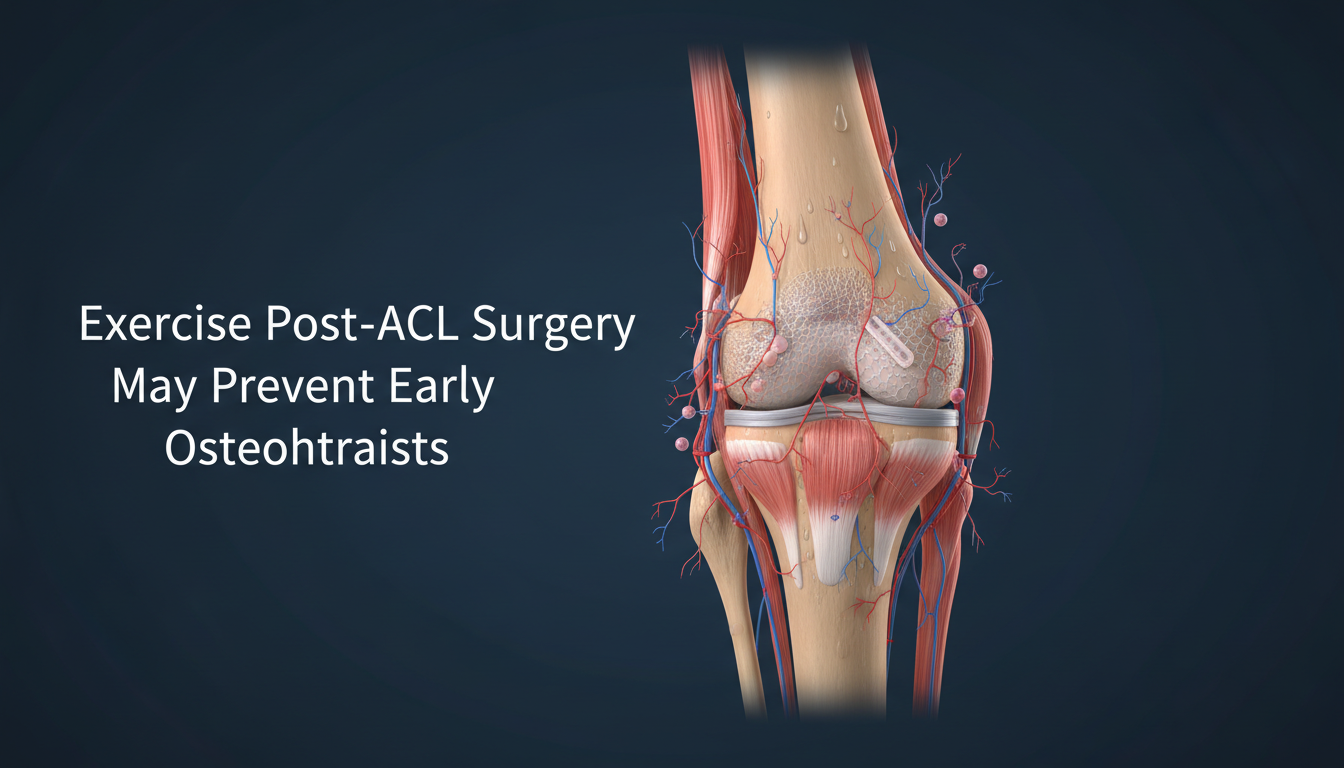
Immunology editorial photograph for Exercise Post-ACL Surgery May Prevent Early Osteoarthritis
IMMUNOLOGY · REAL-WORLD COHORT

Exercise Post-ACL Surgery May Prevent Early Osteoarthritis

Supervised exercise after ACL surgery is safe and beneficial, potentially preventing early osteoarthritis. This finding could revolutionize post-ACL surgery rehabilitation protocols, offering a safe and effective path to recovery for young adults.

3/5 Observational
Evidence Meter · 3/5

Real-World Observation

Finds meaningful patterns in human health records or cohorts, though observational data cannot prove direct cause.

1 min readScienceDaily
IMMUNOLOGY · PRECLINICAL

Compartment-specific PPARδ activity controls the outcome of cancer-immune cell competition and immunotherapy efficacy

These findings identify compartment-specific PPARδ activity as a targetable driver of immune cell fitness that can be harnessed to improve outcomes in immunotherapy-resistant tumors. Therapeutically, PPARδ-activated CD8 + T cells sensitize immunotherapy-resistant microsatellite stable metastatic colorectal cancer to checkpoint blockade in mice, and pharmacological or genetic PPARδ activation enhances human chimeric antigen receptor T cell function.

2/5 Preclinical
Evidence Meter · 2/5

Animal & Preclinical Data

Demonstrated in living animal models before large-scale human safety and dosing trials begin.

1 min readNature Immunology