3 Key Takeaways
Plain English Summary- 01Core Finding
Crucially, this exercise regimen did not lead to any detectable damage to knee cartilage, challenging previous concerns.
- 02Study Evidence
Tested in a observational cohort study at the real-world cohort stage.
- 03Practical Meaning
Observational cohort findings reveal real-world links, though lifestyle or unmeasured factors cannot be fully ruled out without an RCT.
What This Means for You
This finding could revolutionize post-ACL surgery rehabilitation protocols, offering a safe and effective path to recovery for young adults. It mitigates previous fears that exercise exacerbates knee damage, potentially reducing the long-term risk of early osteoarthritis.
The Discovery
A four-month supervised rehabilitation program for young adults post-ACL surgery significantly improved pain, muscle strength, and quality of life. Crucially, this exercise regimen did not lead to any detectable damage to knee cartilage, challenging previous concerns.
How It Works, Simply
This immunology research focuses on supervised exercise enhances joint stability, optimizes synovial fluid nutrition to cartilage, and strengthens surrounding musculature, collectively protecting the knee from degenerative changes.. Researchers evaluated it using an observational cohort study at the real-world cohort stage of medical research.
3 Key Takeaways
Clinical Takeaways- 01Core Finding
Crucially, this exercise regimen did not lead to any detectable damage to knee cartilage, challenging previous concerns.
- 02Study Evidence
Tested in a observational cohort study at the real-world cohort stage.
- 03Practical Meaning
Observational cohort findings reveal real-world links, though lifestyle or unmeasured factors cannot be fully ruled out without an RCT.
Biological Mechanism & Study Design
Study Design & Cohort
Observational cohort study
Observational cohort study · Real-World Cohort
Biological Pathway & Modality
Supervised exercise enhances joint stability, optimizes synovial fluid nutrition to cartilage, and strengthens surrounding musculature, collectively protecting the knee from degenerative changes.
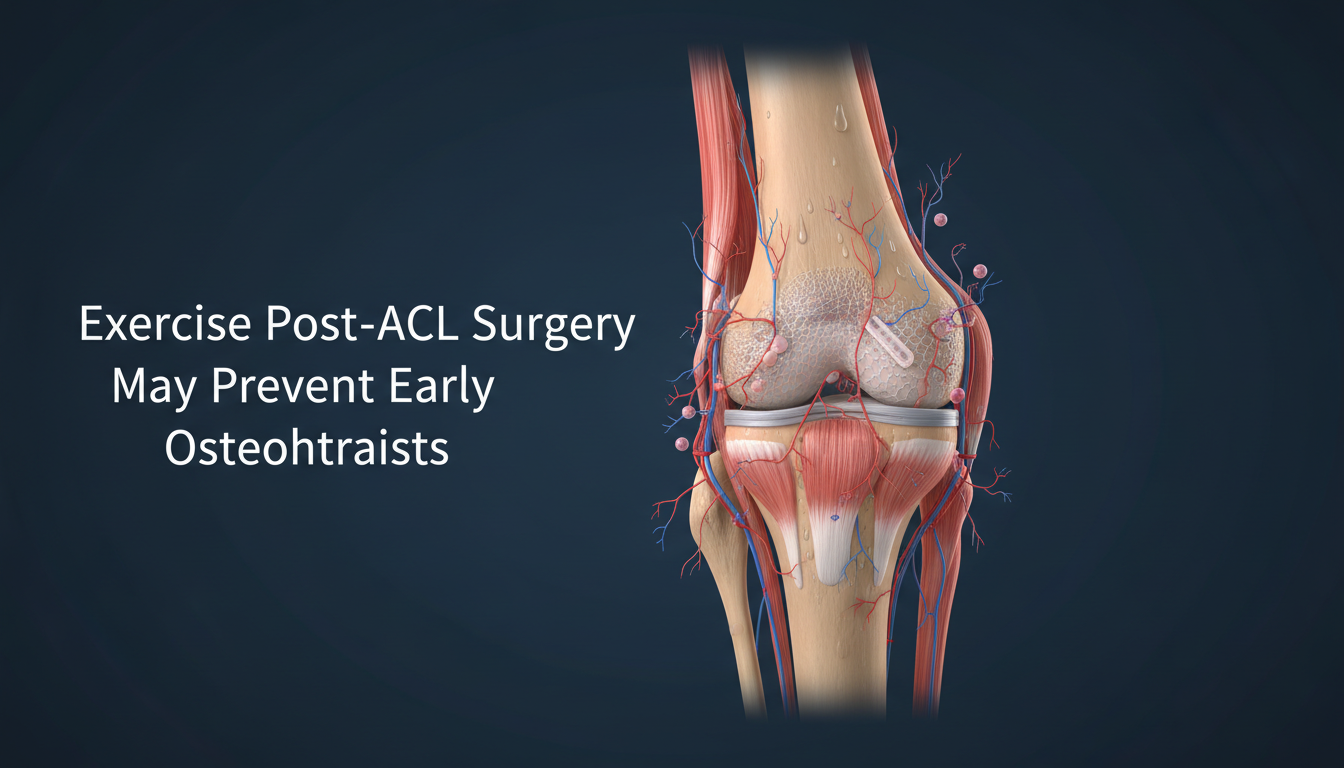
Intervention: Exercise Post-ACL Surgery May Prevent Early Osteoarthritis
Experimental Findings & Endpoints
A four-month supervised rehabilitation program for young adults post-ACL surgery significantly improved pain, muscle strength, and quality of life.
Crucially, this exercise regimen did not lead to any detectable damage to knee cartilage, challenging previous concerns.
Clinical Translation & Practice Context
This finding could revolutionize post-ACL surgery rehabilitation protocols, offering a safe and effective path to recovery for young adults.
It mitigates previous fears that exercise exacerbates knee damage, potentially reducing the long-term risk of early osteoarthritis.
The Bottom Line · Clinical Pearl
“Supervised exercise after ACL surgery is safe and beneficial, potentially preventing early osteoarthritis.”
Published in ScienceDaily · Current Stage: Real-World Cohort