Navigate peer-reviewed breakthroughs by pharmacological class, genetic target, circulating biomarker, or diagnostic modality. Select any clinical entity to inspect all linked studies.
Everyday Health & Science Hubs
Indexed Entities (24)
Biomarker / Assay16 Peer-Reviewed Briefings
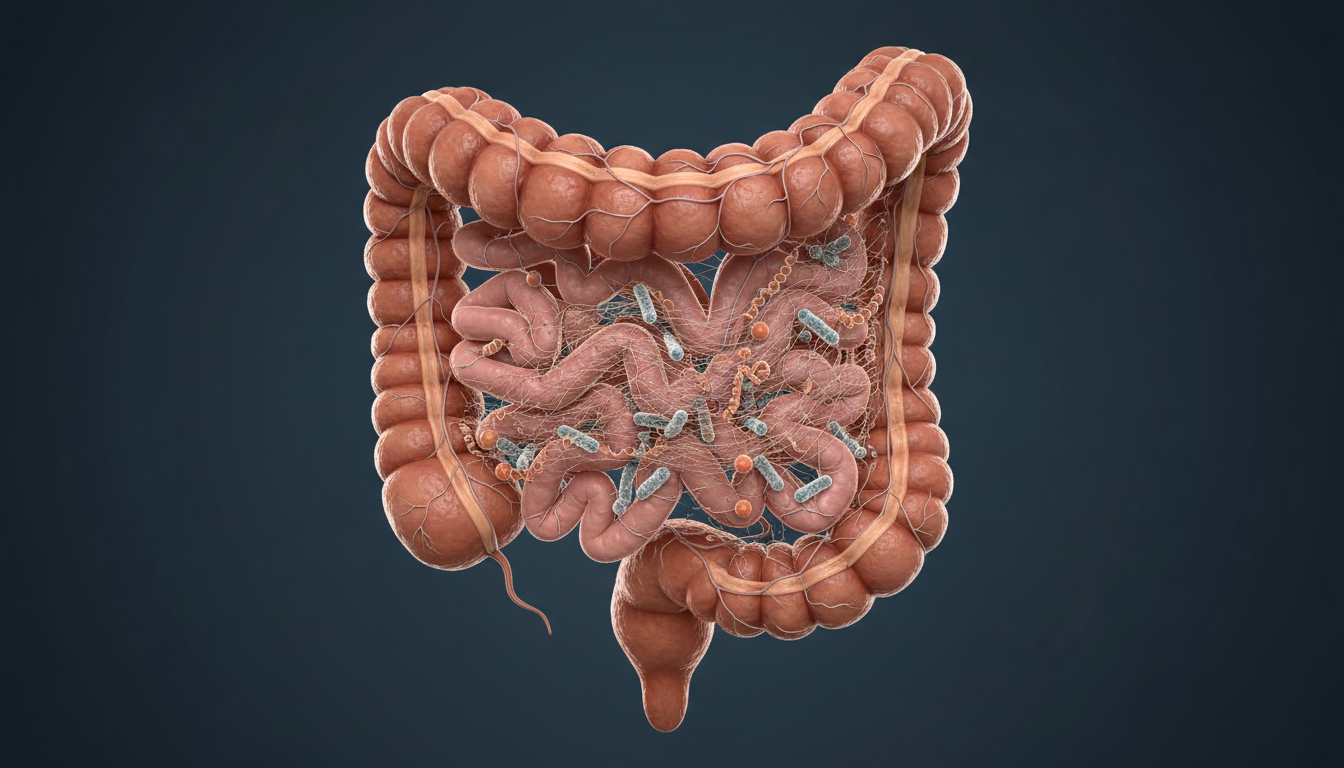
Gut Microbiome & Mucosal Metabolites
Intestinal microbial diversity, short-chain fatty acids, and host-microbiome metabolic signatures.
Active Specialties:GastroenterologyOncologyImmunologyEndocrinologyInfectious Disease
A novel fiber supplement may effectively manage IBS symptoms and gut-related anxiety without causing common digestive distress. This discovery offers a promising new non-pharmacological option for millions suffering from Irritable Bowel Syndrome, potentially alleviating symptoms without common digestive side effects.
2/5 Preclinical
Evidence Meter · 2/5
Animal & Preclinical Data
Demonstrated in living animal models before large-scale human safety and dosing trials begin.
Specific dietary interventions, unexpectedly including some 'unhealthy' diets, may enhance cancer immunotherapy efficacy (real-world effectiveness in the trial) through gut microbiome modulation. This challenges traditional assumptions about diet's role in cancer treatment, suggesting that certain dietary patterns could potentially be leveraged to optimize immunotherapy outcomes.
2/5 Preclinical
Evidence Meter · 2/5
Animal & Preclinical Data
Demonstrated in living animal models before large-scale human safety and dosing trials begin.
A toxin produced by *Bacteroides fragilis* directly damages the colon and fuels inflammation, acting as a key driver in colorectal cancer development. This breakthrough provides a crucial missing link in our understanding of how gut microbiota can influence cancer development.
3/5 Observational
Evidence Meter · 3/5
Real-World Observation
Finds meaningful patterns in human health records or cohorts, though observational data cannot prove direct cause.
The toxin produced by the common gut bacterium *Bacteroides fragilis* directly damages the colon and drives colorectal cancer development through inflammation. This discovery resolves a long-standing mystery regarding the link between gut bacteria and colorectal cancer, providing crucial mechanistic insight.
3/5 Observational
Evidence Meter · 3/5
Real-World Observation
Finds meaningful patterns in human health records or cohorts, though observational data cannot prove direct cause.
Tfh cell senescence impairs IgA production, disrupting gut microbial homeostasis, with consequences to host metabolic disease. This Tfh-microbiota-obesity pathway was also observed in diet-induced obese mice and in humans.
2/5 Preclinical
Evidence Meter · 2/5
Animal & Preclinical Data
Demonstrated in living animal models before large-scale human safety and dosing trials begin.
We identify the gut microbiome as a key mediator linking lifestyle to health and disease, providing a framework for microbiome-based assessment to guide lifestyle interventions for health promotion and disease prevention. Microbiome-defined health- and disease-oriented mediator axes were supported by fecal short-chain fatty acids and plasma cytokines from >1,700 individuals, revealing butyrate-associated anti-inflammatory and pro-inflammatory host profiles, respectively.
3/5 Observational
Evidence Meter · 3/5
Real-World Observation
Finds meaningful patterns in human health records or cohorts, though observational data cannot prove direct cause.
Zhao et al. identify microbial AdhE as a metformin-degrading enzyme in metformin low-responders and propose enzyme-based microbiome intervention as a strategy to rescue therapy. Published in Cell metabolism, these peer-reviewed endocrinology findings provide quantitative evidence to inform clinical risk stratification, therapeutic decision-making, and follow-up trial design.
3/5 Observational
Evidence Meter · 3/5
Real-World Observation
Finds meaningful patterns in human health records or cohorts, though observational data cannot prove direct cause.
The secondary pharmacodynamic endpoint of GI domination by Enterococcus and Enterobacteriaceae spp. was not achieved. . The key secondary efficacy (real-world effectiveness in the trial) endpoint revealed a significantly lower incidence of BSI with SER-155 versus placebo (10.0% versus 43%; OR 0.15; 95% CI 0.01-1.13; P = 0.0423; 77% relative risk reduction).
5/5 Gold Standard
Evidence Meter · 5/5
Gold-Standard Human Evidence
Backed by randomized controlled human trials or a formal meta-analysis pooling multiple clinical studies.
These findings support a precision MHT framework integrating gut and vaginocervical community typing for personalized care. Baseline vaginocervical community types determined differential outcomes: G. vaginalis-dominated individuals shifted most toward healthier communities, whereas diversified individuals improved least.
3/5 Observational
Evidence Meter · 3/5
Real-World Observation
Finds meaningful patterns in human health records or cohorts, though observational data cannot prove direct cause.
Cryptosporidium infection is associated with dynamic and persistent alterations in the gut microbiome, even in the absence of diarrhea, which may be related to impaired child growth, and deserve deeper analysis as promising potential targets for microbiota-mediated interventions. Cryptosporidium spp. are enteric protozoa associated with moderate-to-severe diarrhea and impaired growth in children worldwide.
3/5 Observational
Evidence Meter · 3/5
Real-World Observation
Finds meaningful patterns in human health records or cohorts, though observational data cannot prove direct cause.
Blocking this host-fungi interaction is a potential therapeutic strategy to suppress MASLD-HCC. Mechanistically, KYNA directly bound to IQ motif containing GTPase activating protein 1 (IQGAP1) in tumor cells and activated the oncogenic mitogen-activated protein kinase (MAPK) signaling pathway, thereby facilitating MASLD-HCC development.
2/5 Preclinical
Evidence Meter · 2/5
Animal & Preclinical Data
Demonstrated in living animal models before large-scale human safety and dosing trials begin.
Preoperative BOT + BAL elicits pathological responses in patients with pMMR or dMMR CC, supporting the combination as a promising strategy to expand ICI benefits to the early-stage setting. . Eight (29%) and 15 (54%) patients treated with BOT and BOT + BAL, respectively, experienced immune-related side effects, most commonly flu-like syndrome and diarrhea.
4/5 Strong Trial
Evidence Meter · 4/5
Strong Clinical Evidence
Tested directly in patients through a prospective clinical trial or large multicenter human cohort.
Similar to genetic inactivation of autophagy, overexpression of IL-1α in AMs conferred broad spectrum protection against S. aureus and IAV, suggesting a possible strategy to fine-tune immune responses to combat important respiratory infections. As a result, autophagy-deficient mice showed more efficient clearance of S. aureus along with reduced lung damage and inflammation.
2/5 Preclinical
Evidence Meter · 2/5
Animal & Preclinical Data
Demonstrated in living animal models before large-scale human safety and dosing trials begin.
Alginate engages a fiber-microbiota-taurine-epithelial signaling pathway that promotes recovery in preclinical models. The clinical trial did not meet its primary endpoint; however, the biological changes warrant further investigation of alginate as a microbiota-targeted intervention.
5/5 Gold Standard
Evidence Meter · 5/5
Gold-Standard Human Evidence
Backed by randomized controlled human trials or a formal meta-analysis pooling multiple clinical studies.
These findings suggest that ECs have gut microbiota resembling virally-suppressed PWH, and aspirin but not atorvastatin may impact gut microbiota diversity in PWH. There was a significant change in beta diversity after aspirin administration, but no difference in microbiota after atorvastatin.
3/5 Observational
Evidence Meter · 3/5
Real-World Observation
Finds meaningful patterns in human health records or cohorts, though observational data cannot prove direct cause.
Hospitalisation, regardless of country, is characterised by loss of short-chain fatty acid-producing taxa, functional shifts, ARG and pathway changes. Gut microbiome composition and function are associated with short-term hospitalisation risk and provide additional prognostic information beyond clinical variables in a multicountry cohort.
3/5 Observational
Evidence Meter · 3/5
Real-World Observation
Finds meaningful patterns in human health records or cohorts, though observational data cannot prove direct cause.
1 min read·Gut·
Patient & Student Companion
Everyday Lab & Drug Translator
Instant plain-English guides for common blood tests and prescriptions—what normal ranges mean, what high/low values signal, and what to ask your clinician.
Lab Marker3-Month Blood Sugar
HbA1c
Measures the percentage of red blood cell hemoglobin coated with glucose over roughly 90 days.
Normal: below 5.7% · Prediabetes: 5.7%–6.4%
6.5% or higher on two tests diagnoses diabetes; very low values can occur alongside hypoglycemia or hemolytic anemia.
Ask your doctor: “Does my HbA1c match my daily fasting/post-meal glucose trends?”
Estimated glomerular filtration rate—how many milliliters of blood your kidneys filter every minute.
Healthy adult filter rate: 90+ mL/min/1.73m²
Values persistently below 60 for 3+ months (or elevated urine albumin) mark chronic kidney disease; single dips can simply reflect dehydration or NSAID use.
Ask your doctor: “Should we pair eGFR with a urine albumin-to-creatinine test (uACR)?”